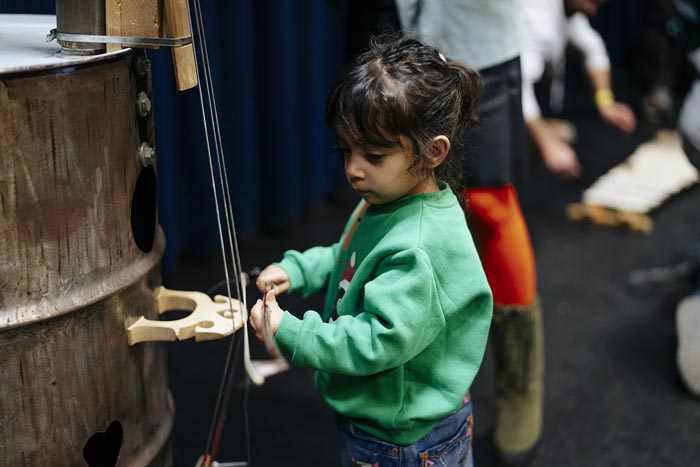
The Conductor Game welcomes players of any age. Through learning based on imitation, repetition, and feedback, participants are able to develop at their own pace. Short experiential sessions boost energy levels, while the shared act of creation strengthens confidence, self-belief, and cooperation. Community members can reveal new or rarely seen sides of themselves, reshaping their place within the group.
Experience has shown that the Conductor Game can be effectively integrated into the toolkit of arts-based education. With the right methodological approach, it supports community development, the cultivation of emotional intelligence, and the fostering of creativity. It can also benefit pedagogical work with children who have atypical neurological development (e.g., ADHD, hyperactivity) or face integration and behavioral challenges.
Structure
The Conductor Game consists of three roughly equal phases (or “acts”):
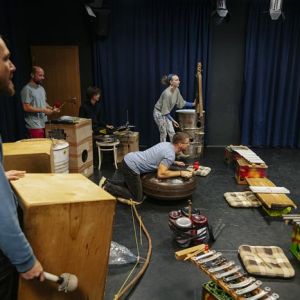
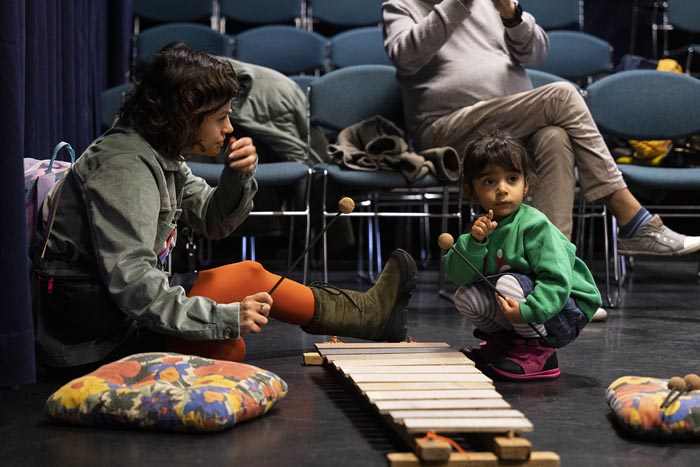
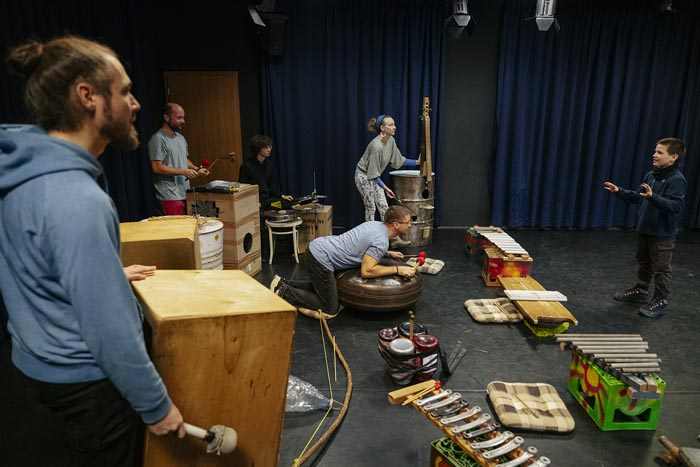
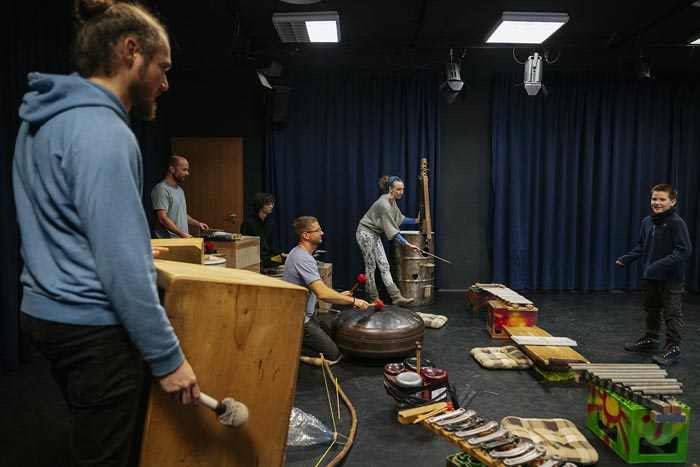
- Instrument demonstration and demo play: presentation of instruments and the Conductor Game on stage (frontal performance)
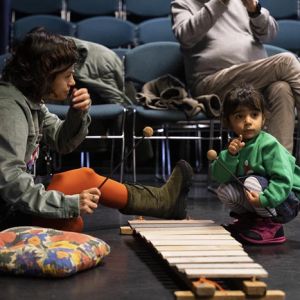
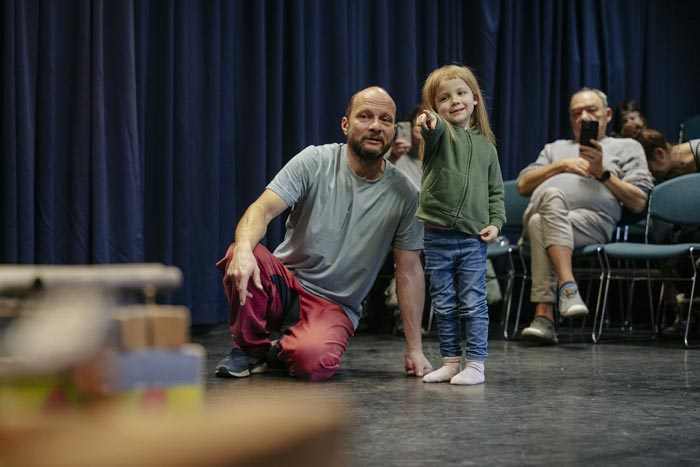
- Instrument Jam: hands-on exploration, free play
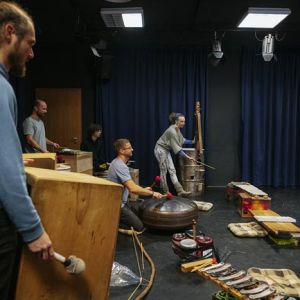
- Conductor Game: structured, rule-based play



Framework and Process
The Conductor Game is a social game requiring cooperation and joint attention. It is essential to agree on the boundaries of play: how long the session lasts, when one is inside or outside the game, what roles exist, and what the overall purpose is. Clear rules and timeframes create a safe environment in which participants can relax, engage, and feel secure.
Implicit rules include:
- Pay attention!
- Do not disturb others!
- Respect your peers!
- If you wish to take an active role, raise your hand!
- Do not nominate others!
- Each role lasts 2–3 minutes, followed by a change!
- Feel free to make mistakes!

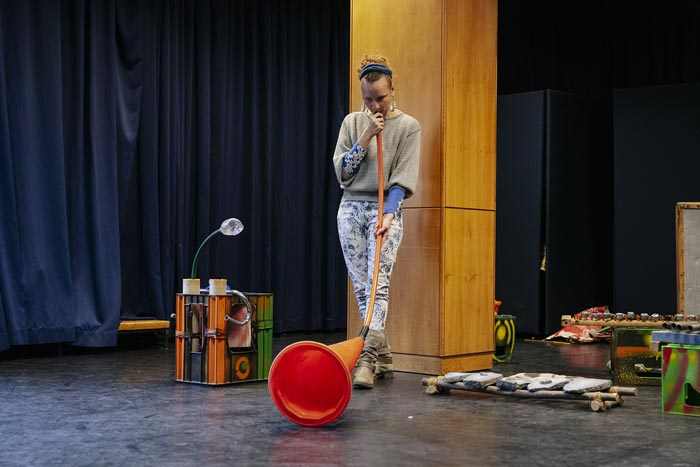
Like many board games, the Conductor Game requires practice and gradual immersion. Initially, basic coordination and comprehension of the rules are emphasized. With experience, participants become more comfortable with the behaviors associated with each role, eventually reaching a creative and expressive level of play.
Once a group masters a certain level of musical complexity, the challenge can be increased (e.g., the number of simultaneous tasks). Different roles demand different strategies and skills. A session typically allows for 10–15 rotations (rounds), with each role lasting 2–3 minutes before a switch. Rules may be modified across multiple dimensions, such as:
- Roles (musician, conductor, audience)
- Number of participants in each role (e.g., trio, two conductors, large audience)
- Duration of rounds
- Musical parameters (tempo, volume, timbre, rhythm)
- Ensemble structures (sections, soloists, etc.)
- Formal structures (e.g., rondo form)
- Sequences (e.g., loud–soft–loud passages)
Methodological Perspective
The musical outcome of the Conductor Game is not objectively measurable. There are no winners or losers. The “reward” is the subjective sense of joy evoked by creativity, experimentation, and the quality of shared experience. This is unusual compared to most games, where the aim is to win. Thus, learning this innovative game takes time, as it contrasts with school and board games where success is typically tied to order, victory, or avoidance of loss.
Over the past years, practice has shown that the Conductor Game, as an experiential-pedagogical program, integrates well into preventive and developmental educational contexts. Its structure provides a safe and supportive framework for experimentation with:
- new roles
- new perspectives
- new communication channels
- new behavioral patterns
- decision-making opportunities
- responsibility
- risk-taking
- learning
Although the emphasis lies on non-verbal (musical and gestural) communication, the transfer effects extend to everyday interactions if educators, facilitators, and community organizers are open and professionally prepared. For example, after the game, groups can experiment playfully with sound colors, pitch, or intensity and their emotional effects; practice storytelling, dialogue, attentive listening, imitation, deviation, attunement, and disconnection. Such activities require no sophisticated instrumentarium: household objects, body percussion, and vocal sounds are sufficient to extend the experience.
Practical Requirements
Petra Kovács
Sociologist – Music Therapist – Complex Arts Therapist